

When the problem is too big, make it local
Friday Footnotes #16
Welcome to Friday Footnotes, a weekly newsletter from Storygram Parents. It’s even got pictures 🙌
Each week I touch on reading, parenting, motivation, children’s books, education, writers, and whatever else catches my attention. Enjoy!
This week’s footnotes 🧐
1. Machine Time
This week I’ve been listening to Dilla Time by Dan Charnas. It’s one of those books that benefits from being listened to over being read, with snippets of music and sound clips throughout. The subject of the book is James “J Dilla” Yancey, a prolific and Grammy-winning music producer who developed a rhythmic style that became widely emulated in hip hop and neo-soul.

The book is part history, part musical critique, part drama. It’s wonderfully written and a fascinating insight into a world of music that I love.1
While he had a very attuned sense of musicality, J Dilla’s story is one wrapped up in the rise of machines and technology. Growing up in Detroit, he lived in a city where the modern industrial revolution hit hard, machines replacing human workers in droves.
He became what could be described as a musical programmer, at one with the new sampling and drum machines that emerged. With these he was able to produce hit songs in minutes.
In the book, Charnas describes the development of machine time — how the emergence of digital recordings began to introduce perfection to timing and, even more interesting to my mind, how digital music feels ‘cold’ compared to warmer, analogue recordings.
Part of the reason for this sensation is that analogue music is continuous. Even when a musician stops playing, there is something happening. There’s air moving in the studio, there’s a breath, a music sheet turning, a pedal being pressed or a head turning. There is never silence.
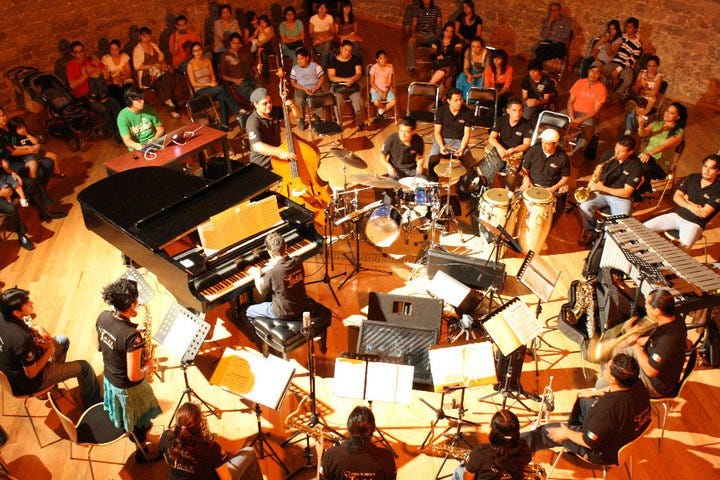
Contrast that with digital music. The space between notes is silent — and not just what we might think of as silent—no obvious noise—but absolute silence. There is sound, and then there is the absence of sound. This is unnatural.
Digital music is cold and harsh, and requires significant human intervention to make it ‘feel’. Part of J Dilla’s genius was finding and sampling original recordings, full of heart and soul, that he could bring in and manipulate in the digital environment, to bring warmth to the music.
Philosophical Footnote: If synthesised (digital) music is machine language in musical form, where is the ‘silence’ in our current machine technology, particularly AI? It might be less obvious, but deep down, the machine language at its core is made up of zeroes and ones, on and off, noise and silence — is this what we sense when we say something made by artificial intelligence has no soul to it? The void in the machine?
Is the only way to emulate soul in machine-produced works by sampling (ripping off) human works?
On a related note…
2. When the problem is too big
It’s tempting to despair when looking at some of the problems we face today. The problem of how to motivate children to read is one that, I believe, has serious implications for the health of our society. But it’s too big. Sometimes, when I consider it for too long, it becomes all-consuming and exhausting.
Something I’ve been thinking about (in part inspired by the writings of Hadden Turner, Ruth Gaskovski amongst others) is about addressing big problems at a local level. Instead of lamenting huge problems, we reduce our field of vision to those around us. Our ‘village’, if you will. That might be your town, or family, or local community.
The internet sometimes presents us with the impression that we can change the world, and yet we ignore the people in our lives who could most actively benefit from what we offer. Sure, it might not be scaleable, but perhaps not everything in life has to fit the silicon (valley) mould.
It sounds a bit like the principle of being trusted with a little before being trusted with a lot2.
Don’t get me wrong, I’m working towards solutions that will hopefully benefit parents and children on a wider scale than my immediate network. But if I’m unable to help implement improvements at the local level, should I even be trying on the wider one yet?
Footnote for thought: who are the children in your circle who would benefit from being read to, and encouraged in, reading? What has worked in your ‘village’ and what has not?
Can I ask a favour? 🙏
Please comment, share, or like our articles… it helps the algorithm make good choices 😜
Perhaps you can think of one parent you could send the link to? Thank you so much!
3. Don’t stop learning!
For adults and children alike: never stop learning!

My friend Zoë told me yesterday that she’s going to learn the flute. She’s already very musically gifted, and this is just another string in her bow, so to speak. One of her friends is a music undergrad, and they will trade flute lessons for warm meals. Seems like a good deal for both parties!
Her enthusiasm and curiosity about learning is something I applaud in all walks of life, and the approach — finding a personal tutor, who in this case happens to be a friend — seems to me one of the best ways to catch their enthusiasm for whatever subject you’re vaguely interested in.
I’ve realised that one of the reasons I enjoy this platform (Substack) so much is that it gives you direct access to the interests, thoughts, and ideas of people, who in a sense become like tutors that we can be inspired by and learn from.
Footnote: who can you learn from in your local circle? Do you have any students or chefs or plumbers or artists or farmers who might inspire you in some area of life you’ve never considered much before?
That’s all for today. Have a wonderful weekend. Keep learning! 😊
Graham
“J Dilla inspired millions with his music including artist like Common, Raekwon, Erykah Badu, Mos Def, Talib Kweli, A Tribe Called Quest, De La Soul, and many many more. On February 10, 2006 just three days after his 32nd birthday, J Dilla passed away after a long time of suffering with Lupus.” — Wikimedia Commons, Maimouna Youssef
For example, the parable of the shrewd manager — Luke 16
‘Instead of lamenting huge problems, we reduce our field of vision to those around us.’
This really resonates with me, Graham. Thank you for another wise and wonderful Friday Footnotes 🙏❤️📚